

Meet Aalessa: A mother shares wisdom and healing
Posted on October 8th, 2021Space to Dream
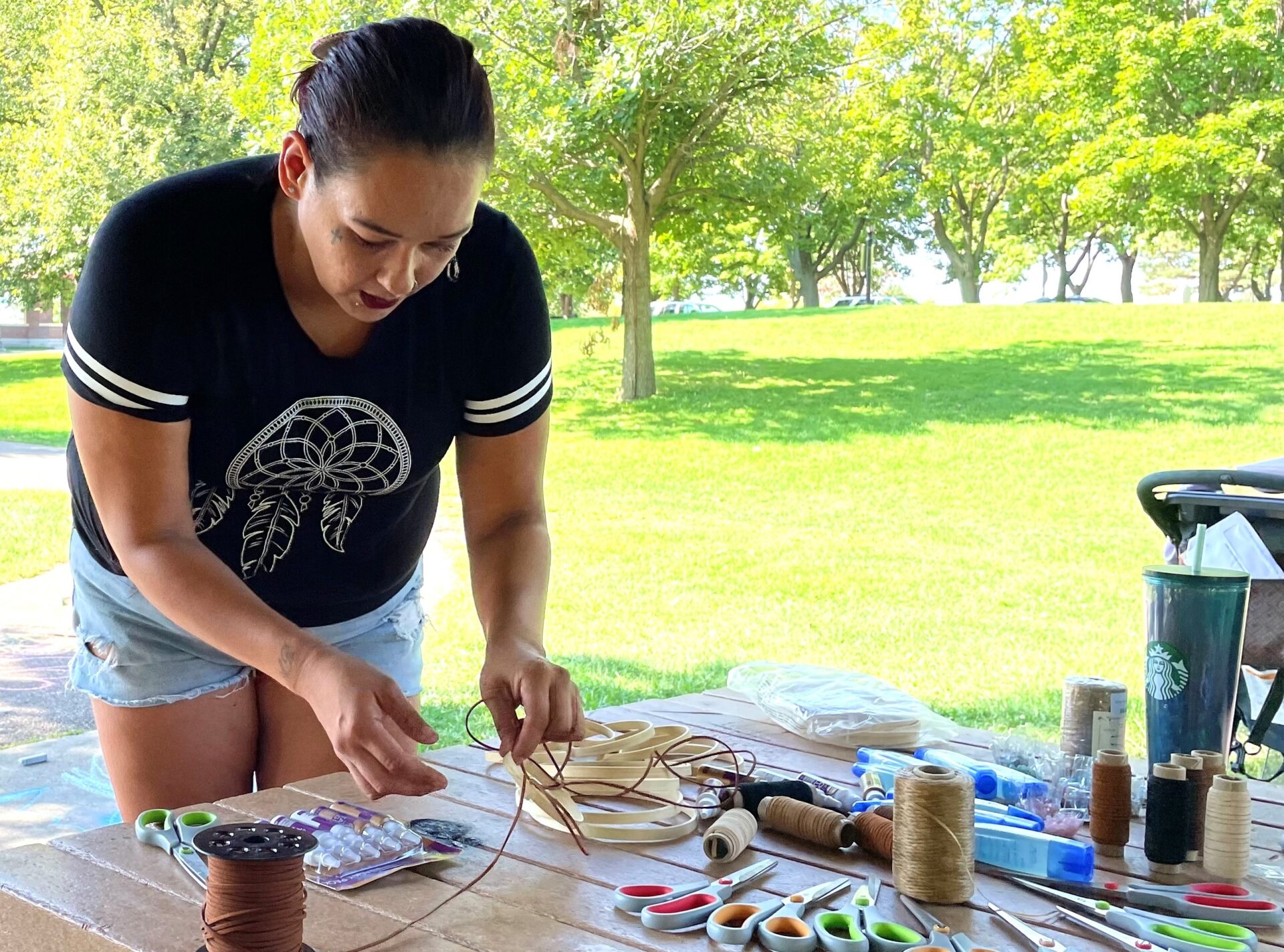
Aalessa was 10 years old when she learned to make her first dreamcatcher. She’d been at summer camp in 1997, finding special tree branches and coaxing them into hoops, turning them into beautiful nets said to protect the dreams of sleeping children in Ojibwe legend. Weaving the intricate patterns of netting came “naturally,” she says.
“I got it like ‘that,’” she says, snapping her fingers. Next thing she knew, she was teaching her fellow campers and her friends.
She got so good at weaving and teaching, teaching and weaving, that she started leading workshops for Simpson Housing Services’ My Time Healing project. The activity is for participants in Simpson’s Family Housing programs — an opportunity for parents, caregivers, and children to get together, relax, and learn skills. Simpson’s Family Housing team participates, too, and provides support and childcare.
As part of Simpson’s efforts to move away from white saviorist tendencies, participants are encouraged to share their own knowledge and talents with each other. Staff, after all, aren’t the only ones with wisdom to impart. Aalessa’s led two workshops now, and she loves doing it.
“The best part is teaching the history behind them and the significance of what they mean to indigenous people,” she says. “I believe you can manifest your own happiness by creating one.”
Aalessa’s part of the Leech Lake Band of Ojibwe, so the story of the dreamcatcher is her story, too. And she has had to manifest her own happiness on a number of occasions. She became part of Simpson’s programs in 2017, after being homeless on and off for about a decade, surviving domestic abuse, and struggling to overcome chemical dependency. In 2012, she’d lost her mother, Jules, to an overdose. She used, she says, in order to numb that pain.
Jules had been beautiful, Aalessa says – curly hair and hazel eyes – and she’d been deeply spiritual. Her face would light up when she talked about her dreams and their hidden meanings. It felt like there was something magical about them.
Aalessa often wishes she could have been awake on the night of her mother’s passing. But she hadn’t been. Couldn’t be. There was, however, a dreamcatcher in the room, keeping vigil. And later, the library called asking Aalessa if she wanted to pick up a book Jules had on hold about dream interpretation.
“I went to get that book, and of course I cried,” she says. “It meant so much to me that dreams meant so much to her.”
It took a lot of work to get where she is now – and some help. Simpson’s programs, she says, helped her get out of the tight spot she was in, gave her “bravery” to end her relationship, encouraged her sobriety, and helped her become a better mother. She has two kids: a 10-year-old daughter named Aamia, and a 2-year-old son named Curren’cy. Her Simpson advocate, Kristi, looks forward to their weekly meetings, even if it’s just to catch up over a cup of coffee. Aalessa works hard, Kristi says – and has “big dreams.”
“It was not only a miracle that someone would help me get my own home and my own place, but they’d seen the greatness in me,” Aalessa says. “Here’s me now, years later, living my dream of showing people what matters to me, which is my culture and my heritage.”
Eventually, she’d like to run workshops like this for a living. Show people how to make dreamcatchers and beaded handbags. Help them find happiness within themselves. Share a bit of what she shared with her mother. In the meantime, she’s getting her GED, and on track to move into her own place through Simpson’s Supportive Housing Program. It’s difficult work, and she doesn’t know exactly what’s headed her way.
“But I know I have good spirit guides, that I have a good soul, and as long as I’m alive, me and my children will be good,” she says.